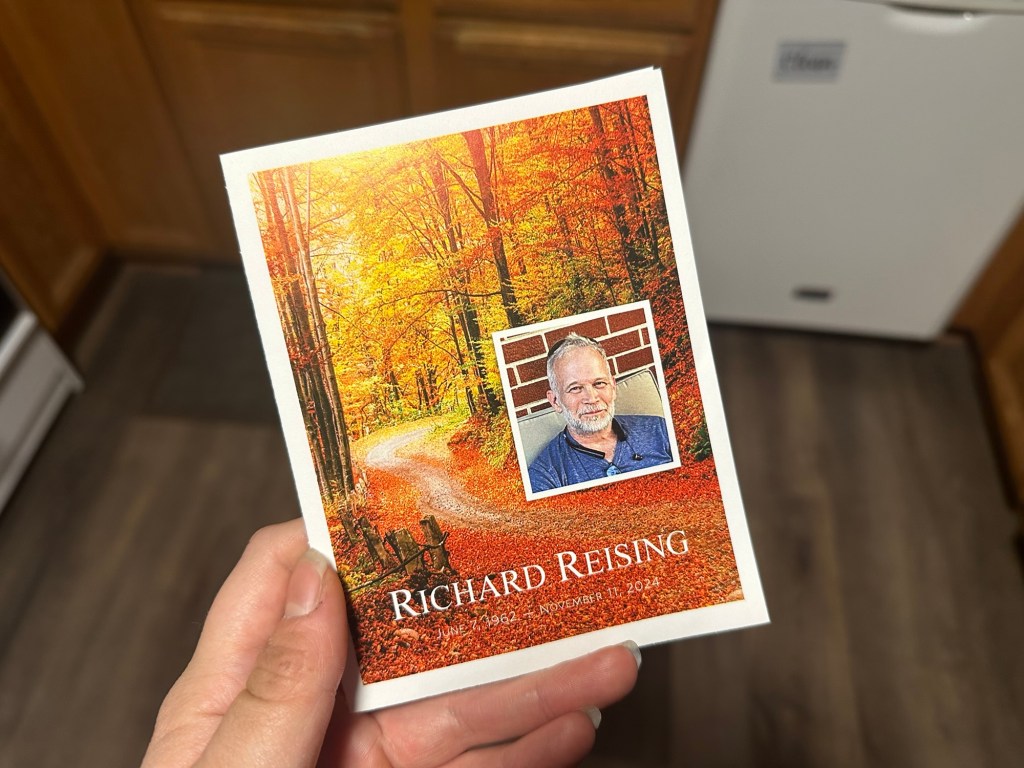
Can you think of that one tragic story of someone else’s loss you remember hearing about, and you thought “I can’t even imagine”? Whether it be a childhood friend, an old neighbor, a distant cousin, a friend of a friend, or someone really close to you? I can think of a handful of these stories throughout the years when I learned about a tragic loss that hit close to home, and I would think to myself, “I can’t even imagine.” Then, in November 2024, I found myself on the other side of hearing, “I can’t even imagine”.
You hear about others’ tragic losses in life all the time, but you never think it will happen to you. The news and shock of my dad’s death spread quickly. So many others were left in shock, confusion, heartbreak for my family. We heard a lot of, “I had no idea he was sick, I had no idea he was struggling” and of course, “I can’t even imagine”.
I’ll never forget the first time somebody said those words to me. I didn’t know how to respond. All of a sudden I became the person other people were thinking about and hurting for. I also would’ve never imagined this either, but yet, there I was, living a nightmare I couldn’t believe was my life. It felt unfair that I was now living this real life nightmare. And it wasn’t. It still isn’t, and yet, somehow, life still goes on.
At the funeral, we decided to be open about what happened. All those who loved my dad and had questions deserved to know. We also didn’t want to brush under the rug the reality of the word nobody wants to say…suicide. Even typing that word feels heavy. As if there is still some shame attached to it. But it needs to be talked about. I got to thinking too, when somebody dies of cancer, a car accident, heart attack, etc., people generally aren’t afraid to state the cause of death. But in a loss which involves the intentional undoing of one’s life, for some reason, we hesitate. We hold back. Others generally aren’t prepared to hear that word either. They don’t know what to say, and this, unfortunately only contributes to feelings of loneliness in suffering through this type of loss. You don’t want to make others uncomfortable, but you also wish more people knew how to hold space for it, without feeling the need to fix it or make it less uncomfortable for themselves.
The people who were there for me the most didn’t necessarily have the perfect words. They were present. They didn’t shy away from the uncomfortable. They were willing to listen and let me cry without making me feel like a burden, or like I needed to tone down my grief for their comfort. If you are wondering how to be there for someone processing heavy grief and trauma, be willing to sit in the uncomfortable. I also know I said this in my last post, but don’t just say, “let me know if you need anything”, and then do nothing. A person in deep grief doesn’t know how to articulate what they need. Just show up without the need to give perfect words, but a listening ear. Show up with the meal. Cut their grass. Shovel their snow. Do their dishes. These most simple tasks feel so heavy when you’re in the midst of deep grief. So just. Show. Up.
One of the best descriptions I’ve heard of grief is it’s as if you’re standing frozen in time in the middle of a road, while cars just continue to speed past. I felt this. I still do. Everything in life feels different and a little tainted now too. Sometimes I envy those living “normal” lives who haven’t been touched by tragedy. Doing normal things also feels so strange. I think all the time, how am I just making a cup of coffee after surviving what I survived? How am I just doing my dishes? How am I still hanging out with friends? Traveling? Living? Smiling? All while carrying the weight of loss.
As a Christ-follower too, I look around me and see how so many in the church feel like they need to act strong because they have Jesus. Let me be the one to tell you this if you didn’t know – you do not have to be strong. In fact, the strongest thing you can do is let yourself fell apart at the feet of Jesus. I’m also not going to be one to tell you that everything happens for a reason. I do believe my God is sovereign, that He knows all things and makes beauty from ashes. I will also do what I need to do to survive, advocate for Huntington’s Disease and mental health, help others navigating grief, but that doesn’t mean I should have gone through what I went through. It doesn’t mean my mom or my siblings or anyone else who knew and loved my dad should have gone through this. It doesn’t mean my dad should have had to suffer. I think of my youngest brother who was only 19 when this happened. I think of the depth of my dad’s pain and what it was like to witness it. How is any of this fair? And it’s not. My heart shatters all over again thinking about the grief and pain in those I love. We live in a very broken, sinful world, and now I long for Jesus’ return even more. One day, everything will make sense in the Lord’s redemptive plan, but until then, there will be suffering. There will also always be someone out there who has it worse, but now I understand suffering a lot more than I did before.
So the next time you feel tempted to say, “everything happens for a reason”, remember how this can downplay the gravity and weight of those who have lived through traumatic losses and experiences. The next time you feel tempted to say, “I can’t even imagine”, remember that they wouldn’t have imagined this either. That phrase was something I didn’t expect to feel like a gut punch until I heard it – it almost felt like hearing, “I’m so glad I’m not you”, even though you know that’s not what the person is intentionally trying to say. It just hurts. And sometimes it’s better to acknowledge, “What you’re going through is really painful, and you don’t have to be strong in front of me.”
I also don’t write any of this with any hard feelings towards those who have said the “wrong thing”. People often mean well and there should be grace for that too. I do believe it’s also important to acknowledge everything you feel during the process of grief – anger, bitterness, sadness, numbness, confusion, anxiety, depression, feelings of abandonment or betrayal, etc. Grief is really messy and really complicated. Sometimes one of the most healing things you can do is to let yourself feel it all without giving it the power to take you out too.
And how do you do this? The only way I know how to is by clinging onto the hope of Jesus, and leaning into godly community. Acknowledge your pain, sit at His feet, and be vulnerable with others. Yes we grieve, and that grief process is very important, but we do not grieve without hope. I am only continuing on by His grace, by His promises, and by feeling the love of those around me in my community. If you know grief well too, I hope you know that your grief matters to the Lord. I pray you are able to cling onto even just a sliver of hope by resting in Him today. One day, if you’ve placed your trust in Jesus, there will be a day where there will be no more pain, no more tears, and no more fears. I remind myself of this often when I feel crushed by grief. I remind myself that when it feels like nobody else understands, He does. This keeps me going. I don’t have to carry this alone. And neither do you my friend.
“Blessed are those who mourn, for they shall be comforted.” – Matthew 5:4
 From Ashes to Grace
Leave a comment